Caisson Seawalls
Singapore
Singapore has created 414 hectares of retained land
with an
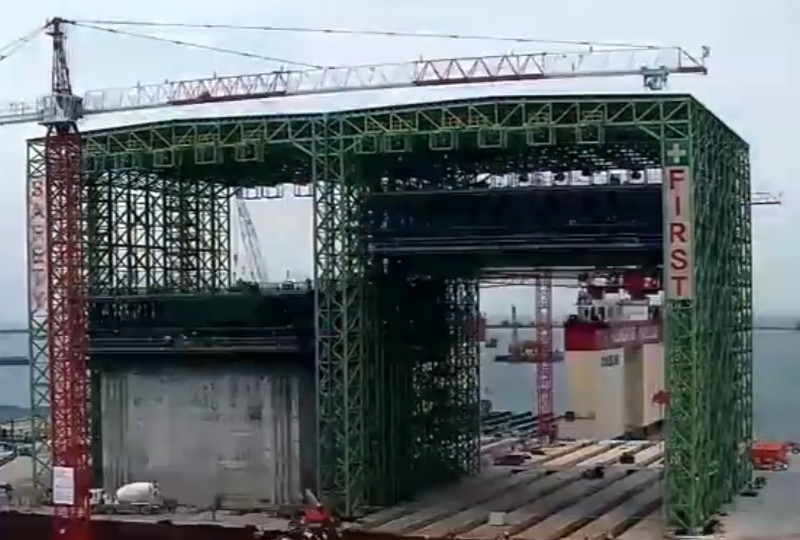
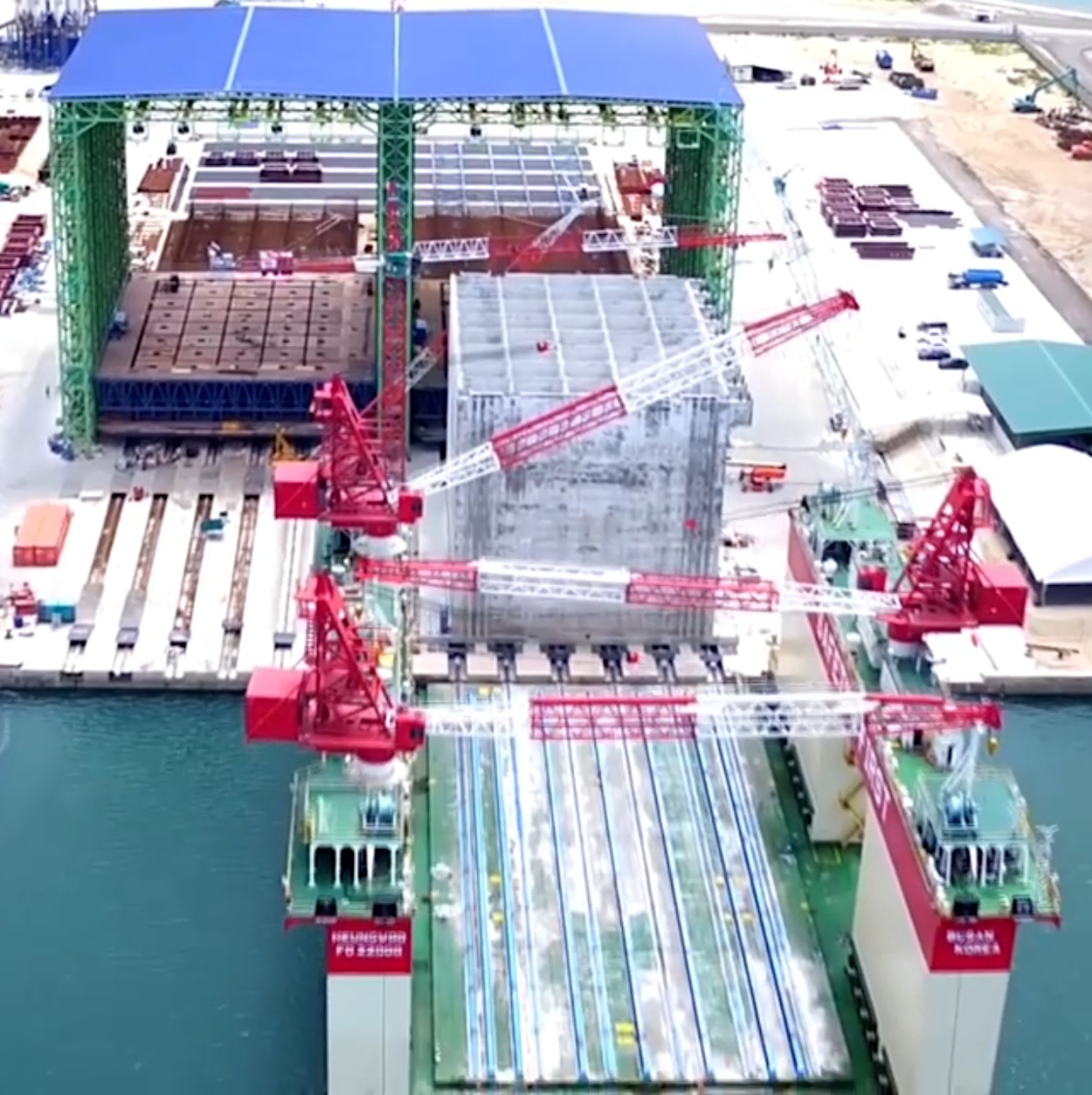
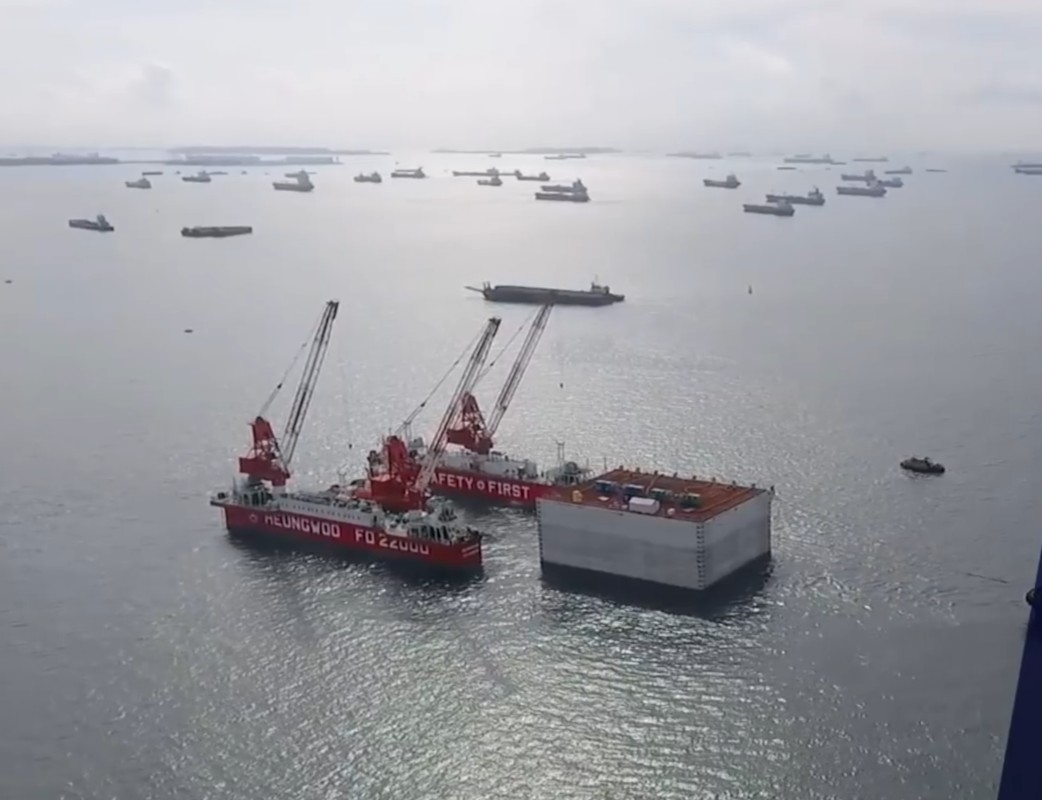
The empty concrete caissons float because they have a bottom. When the caisson is empty, there is only air between the concrete walls, making the overall caisson lighter than water. When in position to lower to the seabed, the caisson will be filled to make it heavy and sink into position.
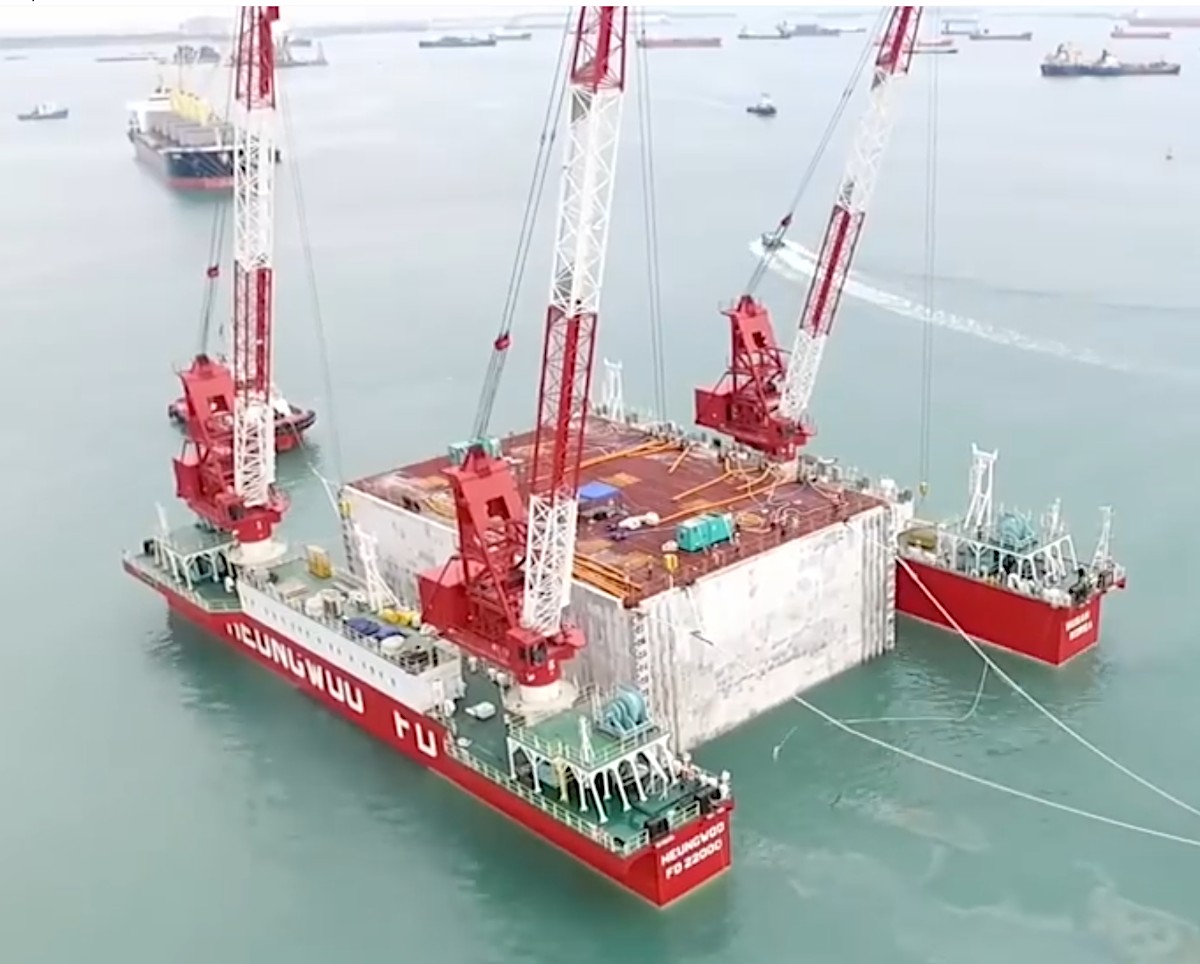
Temporary metal grating allows workers to walk on top of the caisson.
After a new caisson is freed from the semi-submersible barge, it is tied to a standard barge, which a tug boat guides to an already positioned caisson that the new caisson will attach to.
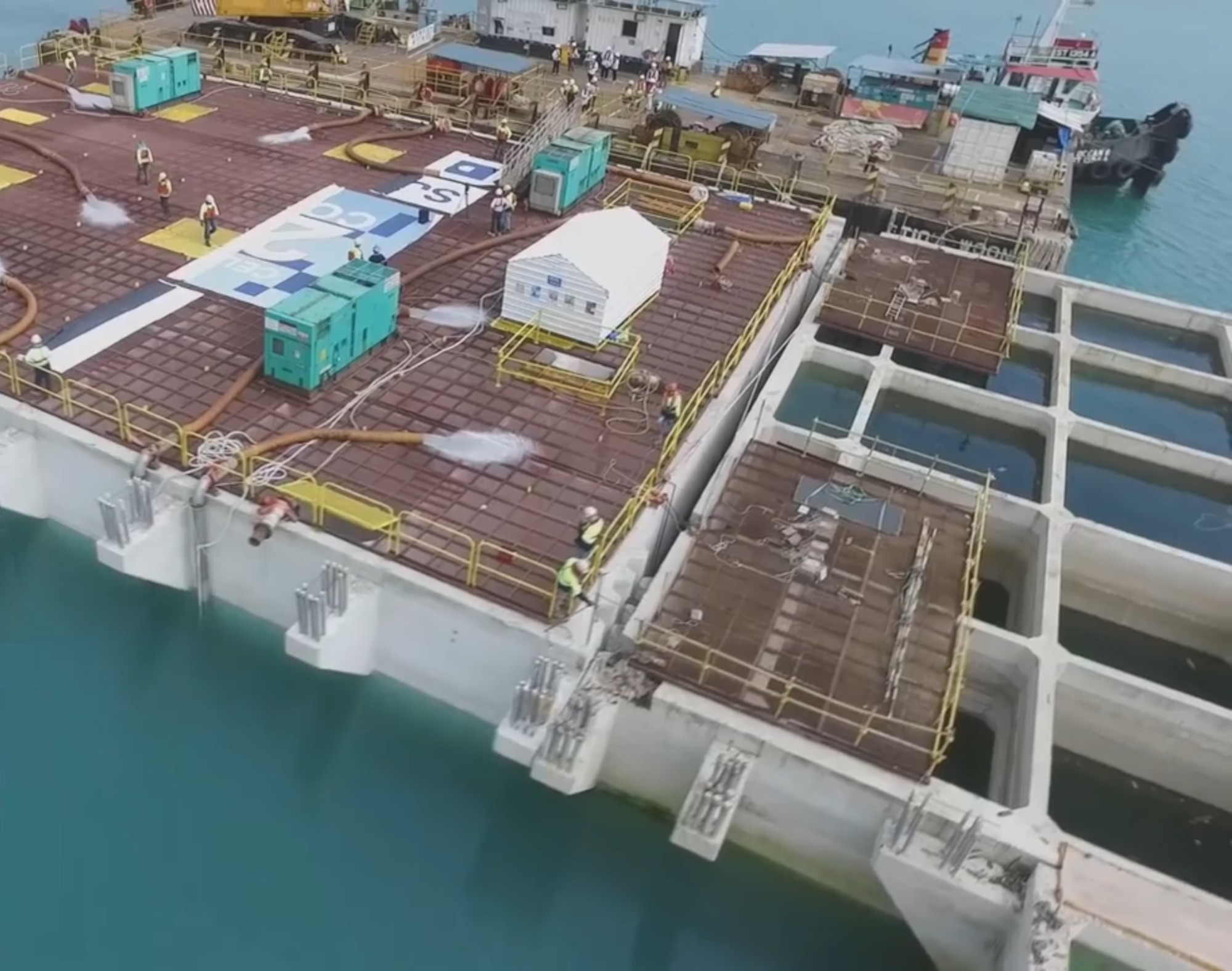
Electricity generators (green boxes on the new caisson) power firehose-type pumps that are hanging in the water over the sides of the new caisson. The large water hoses are placed on top of the temporary metal grating walking surface that allows water to flow downward into the vertical partitions (cells) of the concrete caisson.
Later, after the caissons are in place, the walking surface is removed, and water in the caissons is replaced with sand or other fill.
Caisson Seawalls
Return to: AEC | Caisson Seawalls