Caisson Seawalls
Hitachinaka, Japan
Hitachinaka, Japan has made extensive use of caissons, in 2023 completing a 300 meter caisson quay wall that includes a 30 m extension for mooring lines.
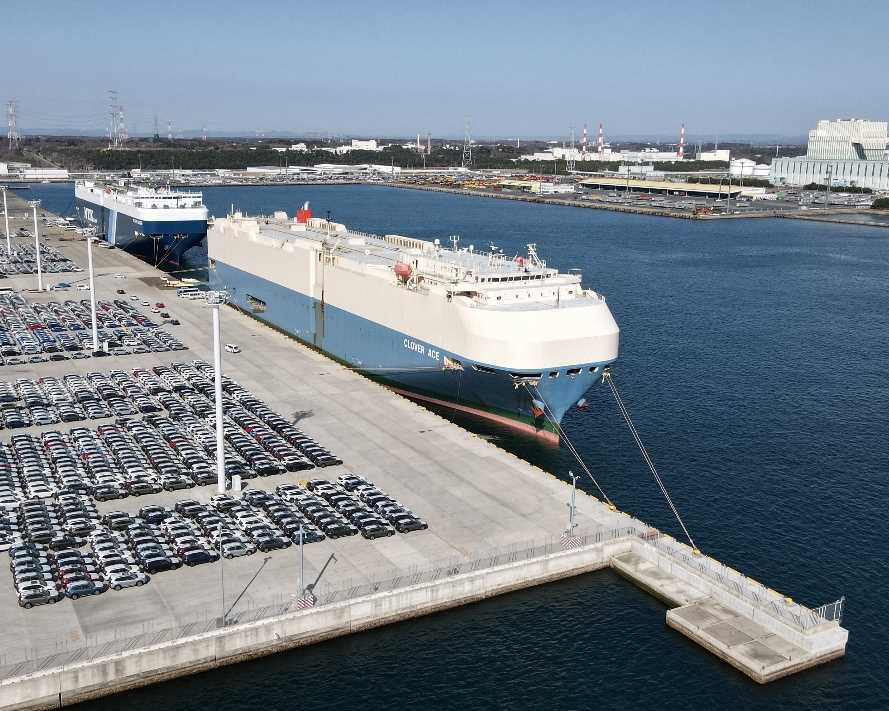
This quay will be used for transporting new automobiles. Quay cranes are not needed for this use, because cargo ships open side hatches for the automobiles to be driven into the ships on ramps.
Hitachinaka has been using caissons for decades, including to build a seawall offshore (discussed later). The following photograph shows an aerial view of the Hitachinaka area in 2005:
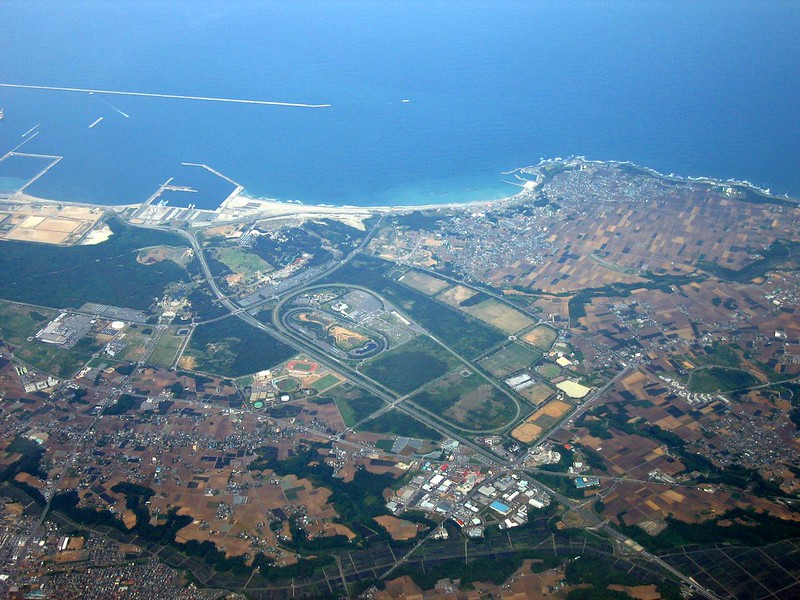
The middle portion of the coast in this photograph is a public beach, and the left portion of the coast is the southern end of the port (north is to the left).
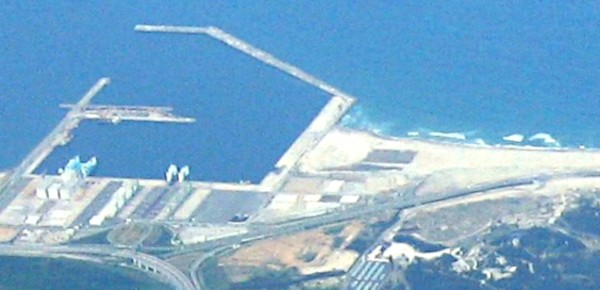
Next we zoom in to the portion of this photo where the port and beach meet.
We zoom in even more, to the port side:
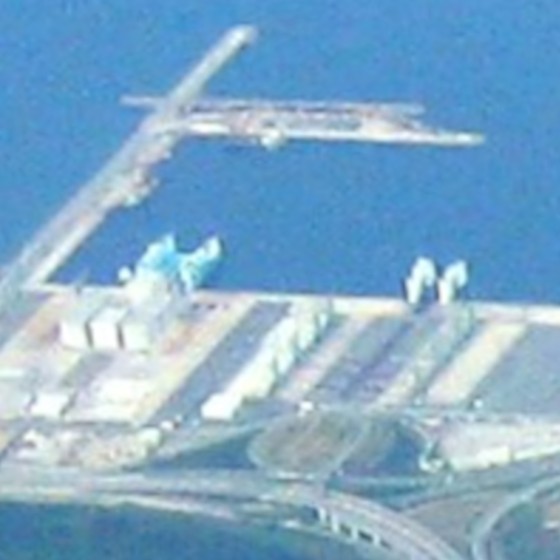
On the shore there is a light blue semi-submersible barge on the left, with several caissons in front of it.
The next photograph is taken from the public beach.
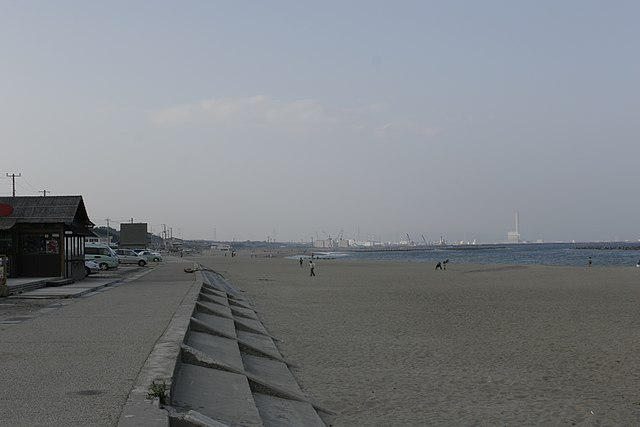
Zooming in to the background shows the light blue semi-submersible barge, with an ocean wave and dinosaurs painted on its sides.
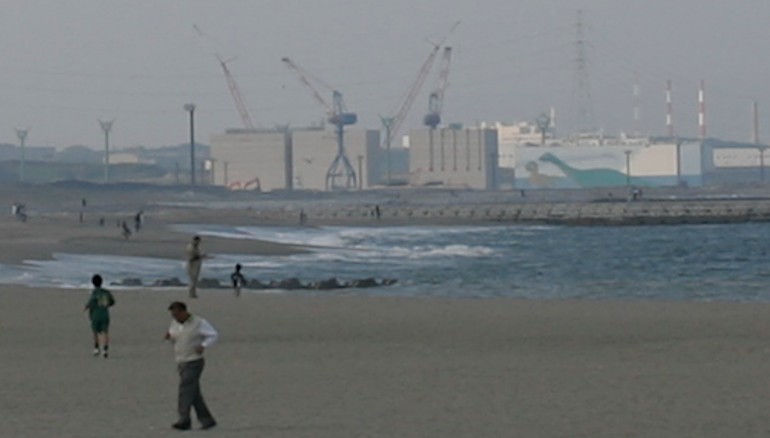
The caisson closest to the semi-submersible barge already has water hoses hanging off its sides, to be used to pump water into the caisson after it is floated into position.
The following photograph was taken afterward, from a position inland instead of on the beach.
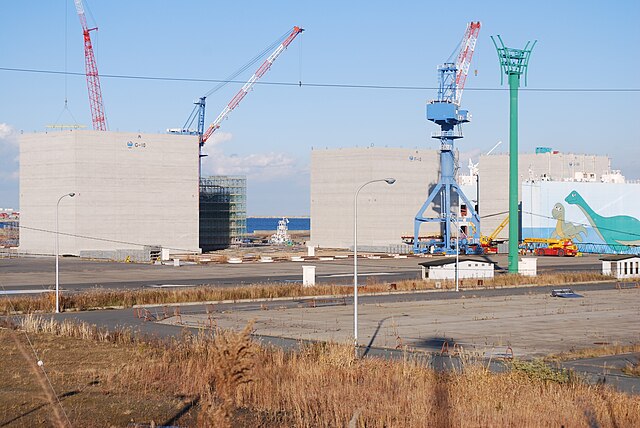
This picture shows caissons at different stages of construction. Zooming in to the center left portion of the photograph shows a new caisson partially constructed.
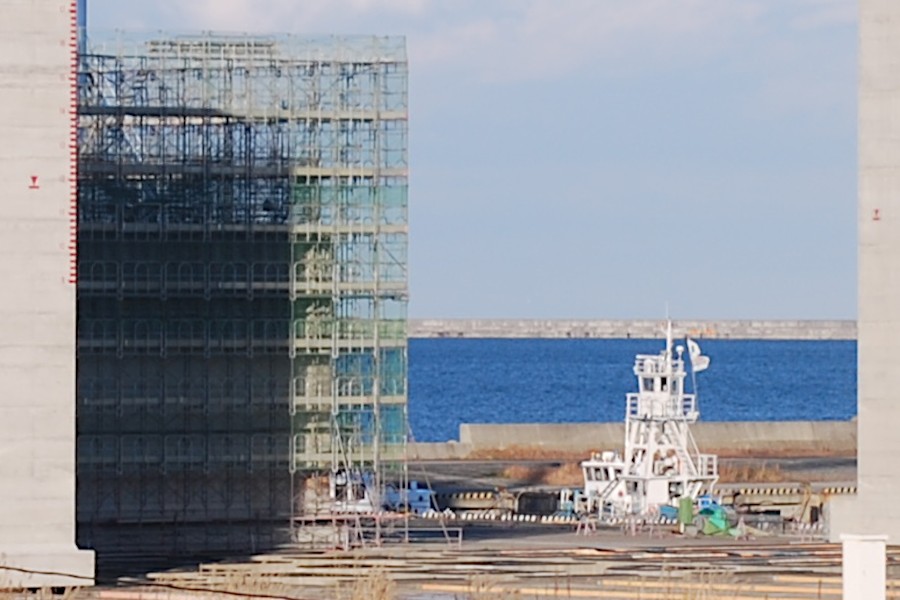
At the other end of the assembly line, a caisson has been loaded onto the semi-submersible barge.
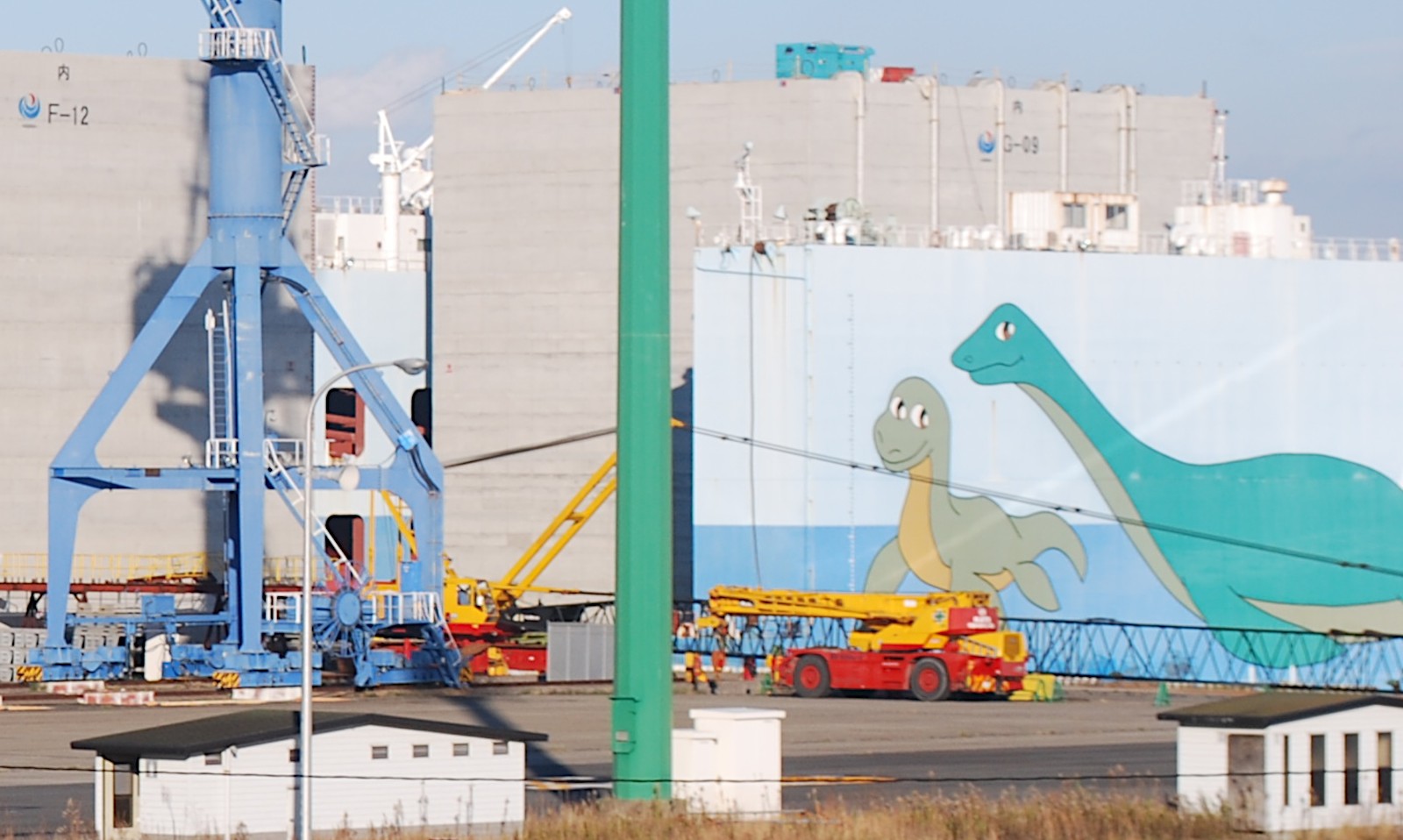
Water hoses are hanging over the sides of the caisson to pump water into it when in position. Green electricity generators shown on top of the caisson will power the water pumps.
The inside of the vertical wall of the barge, shown behind the caisson, has uncovered openings to allow water inflow for submerging the barge, showing red trusses of the inner structure of the barge.
Caisson Seawalls
Page 2 :
Page 3 :
Page 4 :
Page 5 :
Page 6 :
Page 7 :
Page 8 :
Page 9 :
Page 10 :
Page 11 :
Quays
Quay Construction
Singapore
Tema, Ghana
Le Portier, Monaco
Colombo, Sri Lanka
Hitachinaka (this page)
Slip Form
Seawater Construct
Breakwater
Return to: AEC | Caisson Seawalls