Returning to Hitachinaka, here again is
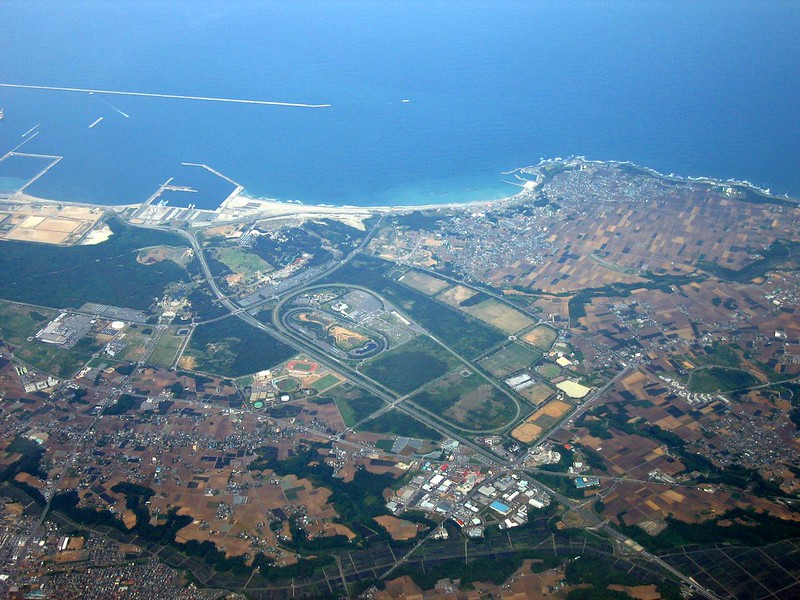
an aerial view of the area,
looking toward the east:
Figure 1:
Aerial view of Hitachinaka, Japan, June 2005.
[JonHanson]
Note the offshore breakwater seawall in upper left portion
of the aerial photograph.
That seawall has since been extended southward
(toward the right in that view).
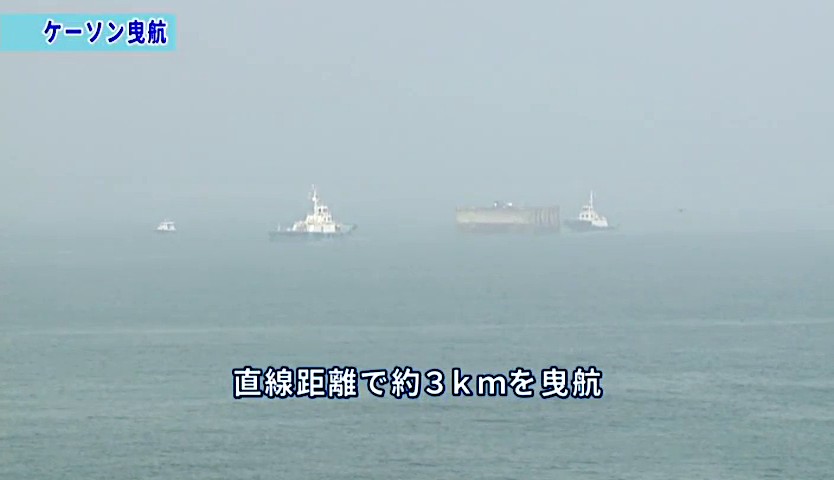
Extending the Hitachinaka seawall required floating
caissons 3 km to the end of the seawall.
Following is an aerial view looking north:
Figure 2:
View of Hitachinaka port, looking north.
Caissons had to be floated 3 kilometers
to the south end of the breakwater.
[MLIT]
The caissons were in seawater curing position near the port
(may have been constructed on land but were in sea water
to cure the concrete).
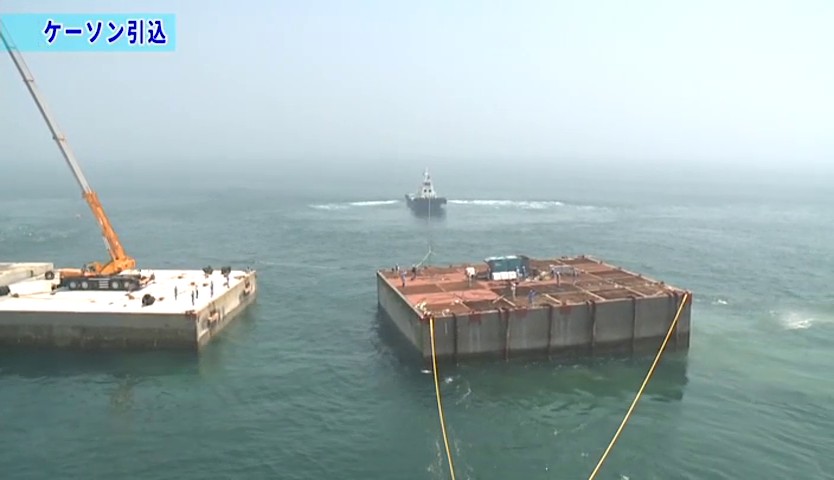
Large tug boats floated the caissons from the curing position
to the end of the breakwater seawall.
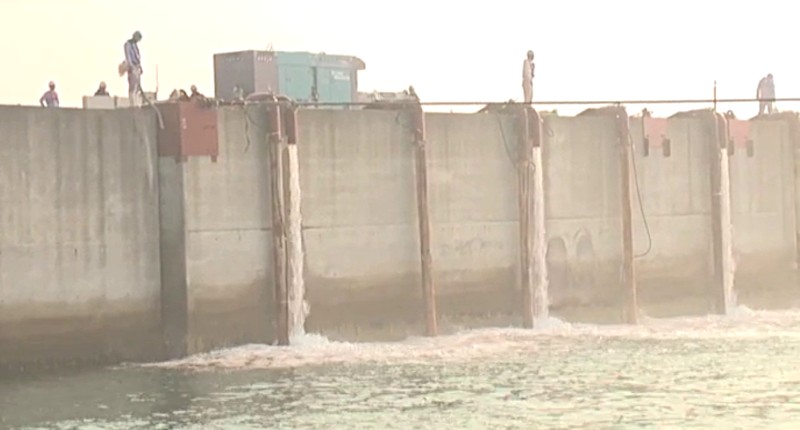
Figure 3:
Caisson is pulled out from a row of caissons curing near the port,
while water is being pumped out of the caisson to make it float.
[MLIT]
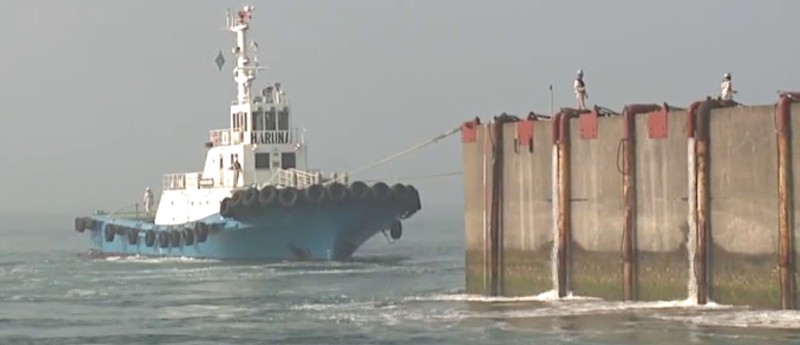
Figure 4:
Large tugboat pulls the caisson.
The caisson is floating higher.
Water continues to be pumped out,
to increase flotation.
[MLIT]
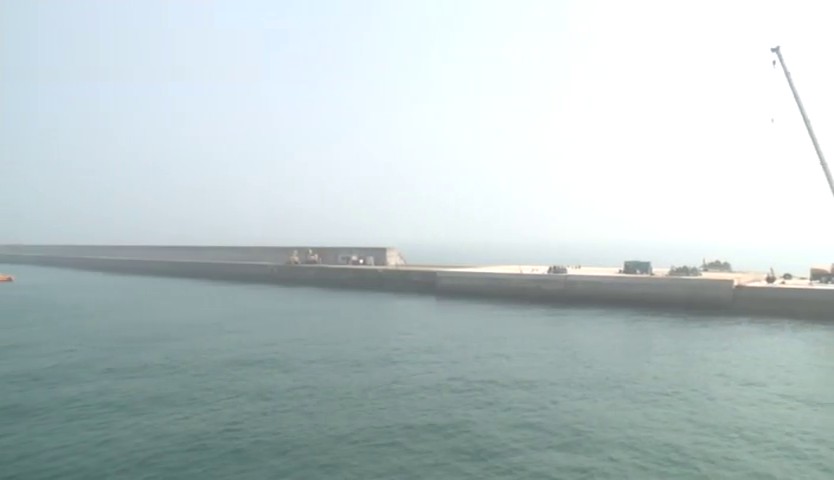
Figure 5:
The end of the breakwater awaits the new caisson.
The portion of the breakwater to the right of the wave wall
are new caissons already in position.
[MLIT]
Figure 6:
The new caisson approaching the scene.
[MLIT]
Figure 7:
The new caisson approaching the end of the breakwater.
[MLIT]
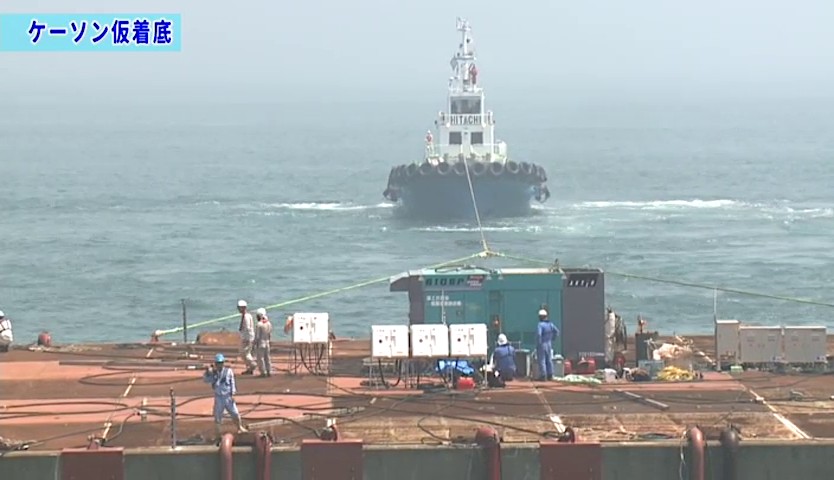
Figure 8:
The larger tug boats provide line tension to prevent lateral drift,
while other tugs push the new caisson into the breakwater.
[MLIT]
Figure 9:
Large tug boat providing line tension to prevent lateral drift
of the caisson, before the caisson is connected to the breakwater.
[MLIT]
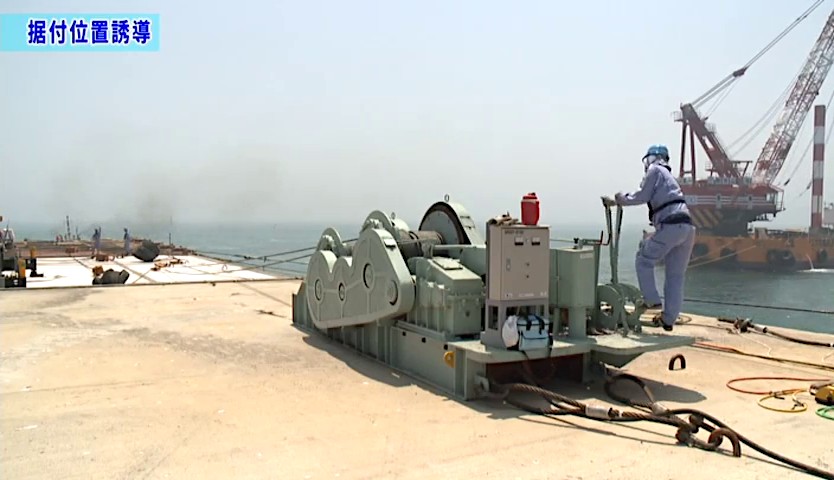
Figure 10:
Large winches and steel cables pull the new caisson
into the breakwater.
Crane barge with spuds (stilts) in up position shown at right.
[MLIT]
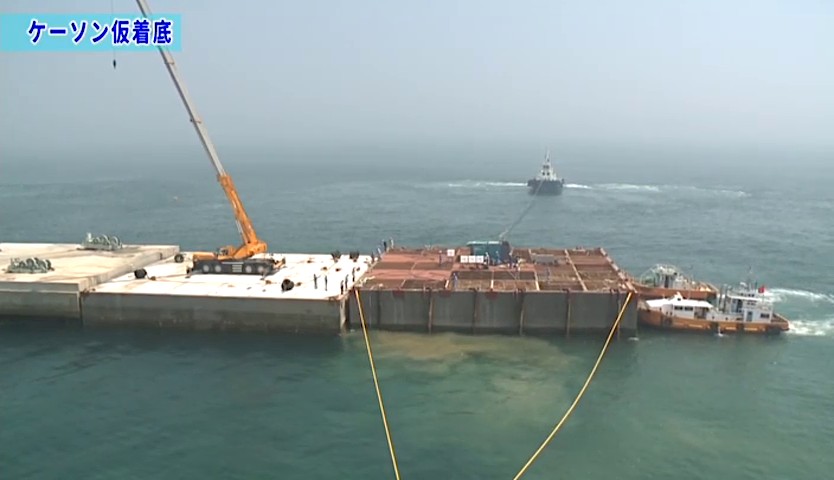
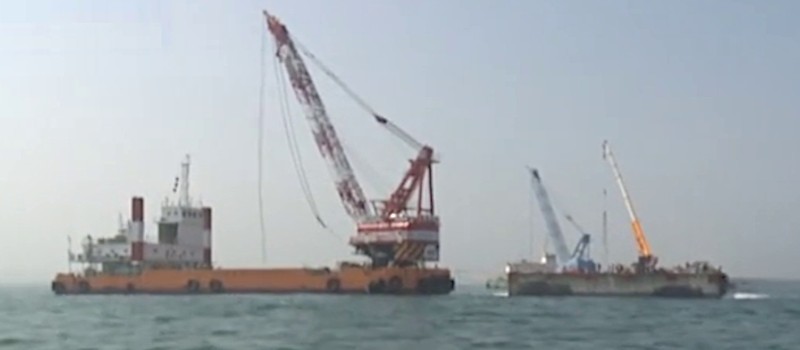
Figure 11:
Crane barge has lowered its spuds into the seabed,
making it stable and ready to dump fill into the cells
of the new caisson.
Water is pumping out of the caisson in preparation
for filling the cells.
[MLIT]
Video
Short video:
Damped oscillation on harbor side,
as another large tug is providing
longitudinal tension on the ocean side
(to the left, not shown).
[MLIT]